The American iGaming Machine Is Shifting Gears
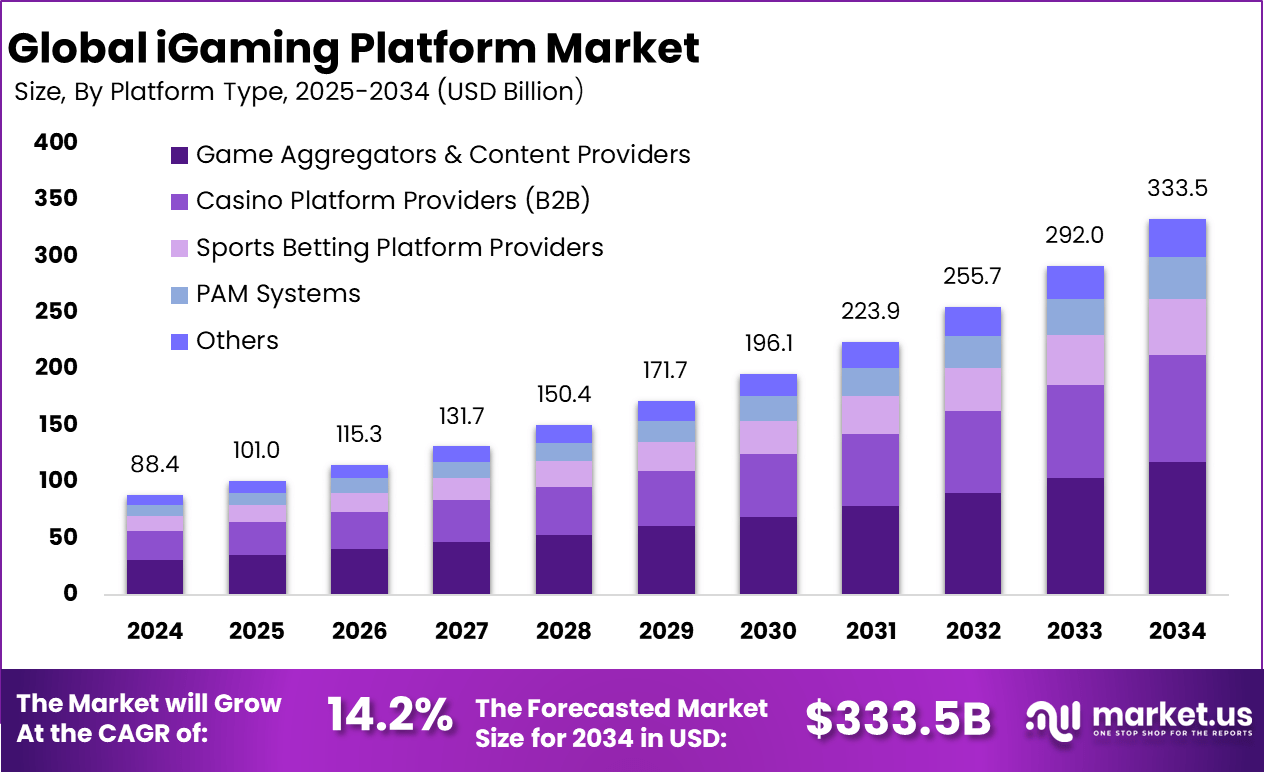
The United States iGaming market does not move quietly. It lurches, pivots, and occasionally blindsides the operators, regulators, and investors who thought they had it figured out. The latest dispatches from inside the industry paint a picture of a sector at a genuine inflection point – one where regulatory momentum, operator consolidation, and shifting player demographics are colliding in real time. If you are tracking US iGaming market trends, the signals coming out of 2025 demand serious attention.
- Regulatory fragmentation remains the single biggest operational headache for multi-state US operators in 2025.
- Consolidation pressure is accelerating, with mid-tier operators facing a stark build-or-buy decision.
- Player acquisition costs continue to climb, forcing a strategic pivot toward retention and lifetime value.
- Responsible gambling compliance is transitioning from a checkbox exercise to a genuine competitive differentiator.
- Technology infrastructure – particularly platform flexibility and API ecosystems – is now a primary M&A consideration.
Regulation: The Patchwork That Won’t Quit
Anyone who expected a tidy federal framework for online casino gaming in the United States has long since abandoned that hope. The market in 2025 remains a state-by-state negotiation, and the terms of each deal vary dramatically. States like New Jersey, Pennsylvania, and Michigan have established mature, relatively stable regulatory environments. Meanwhile, potential high-value markets including Texas, Florida, and California remain locked in political standoffs that show no credible sign of resolution.
This fragmentation has a compounding effect on operator economics. Compliance teams must be built, rebuilt, and retrained for each jurisdiction. Licensing timelines – often stretching twelve to eighteen months – create strategic dead zones where capital is committed but revenue is not yet flowing. The operators winning in this environment are not necessarily those with the best product; they are the ones who have industrialized compliance as a core internal competency.
Analyst’s Note: The states that move next will not simply be those with the highest population. They will be the ones where tribal gaming compacts, commercial operator lobbying, and legislative leadership align simultaneously. Watch for movement in Illinois and Indiana on expanded online casino access before the end of 2026.
Consolidation Is Not a Wave – It Is a Rip Current
The merger and acquisition activity reshaping US iGaming is not the gradual consolidation of a maturing market. It has the character of a rip current – fast, directional, and dangerous to operators who are not paying attention to where it is pulling them.
Why Mid-Tier Operators Are Exposed
The economics of customer acquisition in regulated US states are brutal. Cost Per Acquisition (CPA) figures in competitive markets like Pennsylvania and New Jersey routinely exceed projections built during initial licensing applications. For large operators with diversified revenue streams, elevated CPA is painful but manageable. For mid-tier operators running on tighter margins and narrower player bases, it is existential.
The strategic response has been predictable: seek a buyer, seek a partner, or seek a very specific niche. The operators successfully executing the niche strategy are typically those with a defensible player segment – whether that is a geographic community, a specific vertical like live dealer or sports-adjacent casino products, or a loyalty ecosystem with genuine stickiness. Generic, full-catalog operators without scale are the most vulnerable cohort in the current environment.
Technology as the Real Acquisition Target
A recurring theme in recent M&A activity is that the nominal acquisition target – the operator brand or the player database – is often secondary to the underlying technology asset. Platform flexibility, open API architecture, and proprietary data infrastructure are driving valuation conversations in ways that were not true three years ago.
Acquirers are no longer simply buying market share. They are buying the capability to move faster in the next market that opens. A headless CMS architecture, a modular bonus engine, or a first-party player behavior dataset can represent more durable value than a brand with high awareness but aging infrastructure.
The Player Acquisition Trap and the Retention Revolution
The US iGaming industry spent its early post-legalization years in an aggressive land-grab posture. Enormous promotional budgets, deposit match offers that would make European regulators faint, and welcome bonus structures designed purely to maximize new account registrations. The market is now confronting the downstream consequences of that strategy.
Bonus Abuse and the Quality of Acquired Players
A significant proportion of players acquired through aggressive promotional campaigns in early market phases have demonstrated low long-term value. Bonus abusers – players who systematically extract promotional value without developing genuine product engagement – have inflated acquisition numbers while suppressing true Player Lifetime Value (LTV). Sophisticated operators have spent the last eighteen months rebuilding their acquisition targeting models around behavioral signals rather than raw registration volume.
Retention as the New Battleground
The strategic pivot toward retention is not simply a correction – it is a structural shift in how the most sophisticated US operators are allocating their marketing budgets. Investment in personalization engines, loyalty program architecture, and CRM sophistication is growing as a proportion of total marketing spend. The operators who built genuinely differentiated loyalty ecosystems during the acquisition arms race are now harvesting a meaningful competitive advantage.
Pro Tip for Operators: The most effective retention tool in regulated US markets right now is not a cashback offer or a free spin allocation. It is a genuinely localized, culturally resonant content and communication strategy. Players who feel understood stay longer than players who feel marketed to.
Responsible Gambling Moves From Compliance to Competitive Advantage
The responsible gambling conversation in US iGaming has undergone a meaningful maturation. In early regulatory frameworks, responsible gambling provisions were largely checkbox requirements – deposit limits, self-exclusion databases, and mandatory cooling-off periods. Operators implemented them because they had to, not because they believed they drove business outcomes.
That posture is changing, driven by two forces. First, regulators are becoming more sophisticated. The deposit limit requirements, affordability checks, and behavioral monitoring obligations being written into new state frameworks are substantively more demanding than what was required in first-generation regulatory environments. Second, a growing body of evidence suggests that operators with strong responsible gambling metrics demonstrate better long-term player retention – the two goals are not as opposed as the industry once assumed.
Operators who treat Responsible Gambling (RG) infrastructure as a genuine product investment rather than a compliance cost are beginning to separate from those who do not. This includes investment in real-time behavioral analytics, proactive intervention tooling, and transparent communication with players about their own playing patterns.
The Technology Infrastructure Imperative
Underneath every strategic conversation in US iGaming – regulation, consolidation, acquisition, retention – is a foundational technology question. The market is bifurcating between operators running on flexible, modern infrastructure and those constrained by legacy systems that cannot adapt at the speed the market demands.
The operators best positioned for the next phase of US market expansion are those who have made deliberate investments in composable architecture, ensuring that individual system components – the sportsbook engine, the casino aggregation layer, the payments stack, the identity verification module – can be updated, replaced, or extended without requiring a full platform rebuild. In a market where regulatory requirements change at the state level and player expectations evolve continuously, architectural flexibility is not a luxury. It is a survival requirement.
What Comes Next
The US iGaming market in 2025 is not a market in crisis. It is a market in a demanding and necessary maturation process. The operators who navigated the land-grab phase with discipline – who built compliance capability, invested in retention, and kept their technology stacks modern – are entering this phase with genuine structural advantages. Those who prioritized growth metrics over operational fundamentals are now facing a much harder road.
The regulatory map will continue to expand, slowly and unevenly. Consolidation will continue to reshape the competitive landscape. And the operators who understand that player trust, technological agility, and responsible gambling credibility are now the real sources of durable competitive advantage will define what the next chapter of American iGaming looks like.
:max_bytes(150000):strip_icc():focal(680x343:682x345)/Donny-Osmond-performs-Las-Vegas-021726-86ccbd40773f4c13b93b8a2e086f8cba.jpg)
