
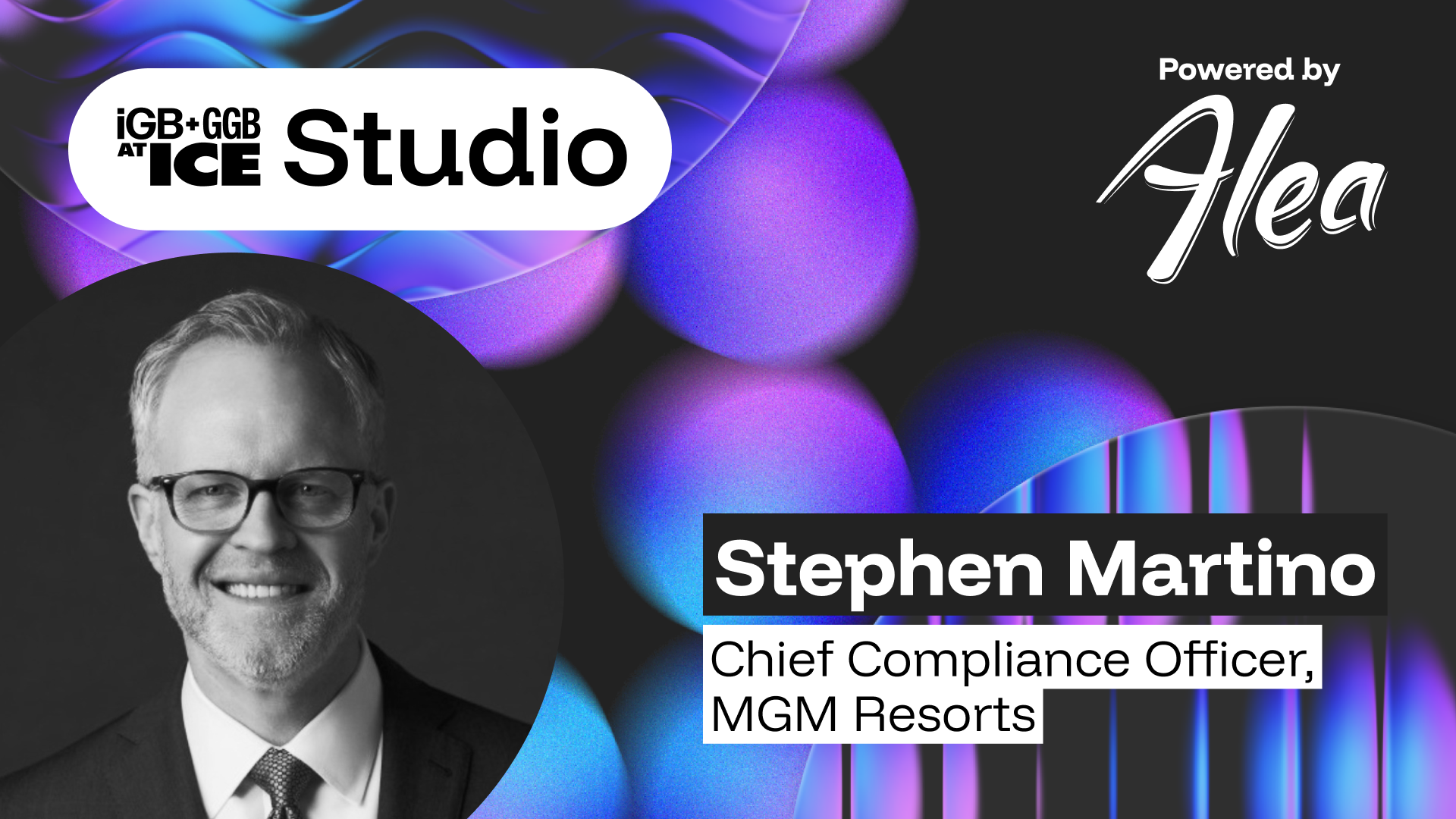
The smartest operators in 2026 have stopped treating compliance like a cost center and started treating it like a competitive feature. That is the message running through Stephen Martino’s iGB@ICE conversation: the era of generic, borrowed compliance tooling is ending, and gaming is being forced to build systems designed for how casinos and sportsbooks actually behave. In practice, that means tighter AML controls, better risk detection, and a more mature relationship with technology including cautious use of AI to support human judgment instead of replacing it. For players, this shift matters because the best form of protection is structural: platforms that detect risk earlier, intervene cleaner, and pay out with fewer disputes because their controls are built to withstand scrutiny.
- Martino frames 2026 as the moment compliance becomes operationally embedded, not bolted on.
- MGM’s AML focus reflects how enforcement pressure is reshaping priorities across US gaming.
- Gaming specific compliance tools are emerging after years of adapting systems built for other industries.
- AI is positioned as support infrastructure for risk teams, not an autopilot decision maker.
- Responsible gambling is treated as culture and training, not a standalone campaign.
Industry Pulse: Why Martino’s message hits harder in 2026
Compliance has always existed in gaming, but the stakes have changed. Regulators are issuing larger penalties, public expectations around player protection have hardened, and digital gambling moves too fast for slow, policy only oversight. Martino’s perspective is shaped by an uncomfortable truth: modern gaming businesses cannot scale safely with manual processes and generic tooling. When a brand operates across markets, channels, and millions of transactions, compliance becomes an engineering problem as much as a legal one.
That is why the conversation centers on rebuilding fundamentals: better training, stronger staffing, and internal processes that can keep up with the velocity of online play. The intent is not cosmetic. It is defensive architecture: systems that prevent lapses before they turn into enforcement actions.
Analyst’s Note: In 2026, “We have a policy” is not protection. Regulators want to see behavioral proof: documented decisions, consistent controls, and evidence that the platform intervened when risk appeared.
The compliance problem gaming has had for years
Martino points to a structural issue that the industry rarely says out loud: gaming historically leaned on compliance systems built for other sectors. Banks, fintech firms, and general retail have different customer rhythms than casinos. Casino patrons can cycle transactions rapidly and repeatedly. Risk patterns in gaming often show up as a behavior stream, not a single suspicious event. That mismatch matters because many compliance failures are not about intent they are about tooling that was never designed for the environment.
Why “gaming specific” tools matter
Gaming specific systems can be tuned to how casinos and sportsbooks actually operate:
- Monitoring that understands frequent, bursty activity instead of treating it like an anomaly.
- Customer risk scoring that adapts to play patterns over time, not only static attributes.
- Logging and case management built for regulatory review and audit trails.
This is the quiet evolution Martino describes: the market is starting to build purpose fit compliance technology rather than retrofitting someone else’s dashboard.
AML in 2026: Why it is now a board level conversation
Martino’s comments land in a US environment where enforcement actions have created real urgency. AML is no longer treated as a specialist function buried in reporting teams. It is a reputational risk, a licensing risk, and a product risk. When operators get fined, the lesson spreads quickly: compliance gaps are not isolated mistakes they are signals that the organization’s controls are not keeping up.
What strong AML looks like in practice
From an operator perspective, strong AML is a combination of process discipline and modern tooling:
- Training that teaches staff to recognize patterns, not just follow scripts.
- Staffing that scales with transaction volume and market footprint.
- Risk systems that identify suspicious activity early and make escalation consistent.
For players, the practical outcome is not abstract: better AML controls often correlate with fewer disputes and smoother withdrawals because the operator is not scrambling when scrutiny appears.
AI in compliance: useful, risky, and easy to misuse
Martino’s stance on AI is pragmatic: it can help teams detect risk and manage cases, but it should not replace human judgment. That distinction matters because AI can become a false authority in high stakes decisions. If a model flags a customer, compliance teams need to understand why, what data drove it, and how to respond without overreacting or underreacting.
Technical Specs: Where AI can actually help
- Behavioral clustering to spot unusual transaction sequences.
- Prioritization of cases so teams handle the highest risk signals first.
- Better consistency in documentation and audit trails.
The risk is governance. If AI tools are adopted without clear thresholds, version control, and oversight, they create new compliance exposure instead of reducing it.
Pro Tip: If you are a player, treat platforms that make identity checks and limits clear as safer, not worse. A site that looks too eager to remove friction often ends up adding friction later: usually at withdrawal time.
Responsible gambling as culture, not a campaign
Martino emphasizes responsible gambling as a cultural pillar across MGM, with training and leadership visibility reinforcing that player protection is not a side project. That framing is important because many operators treat responsible gambling as a marketing layer: a badge, a page, a slogan. The mature version is operational: staff know what to do, tools are visible, and interventions are consistent.
Why culture matters more than messaging
Responsible gambling succeeds when it is built into routine:
- Employees recognize risky patterns and have clear escalation steps.
- Player tools like deposit limits and cooling off options are easy to access.
- Leadership treats safer gambling as part of performance, not a compliance checkbox.
For the industry, this is where compliance and responsible gambling converge. Both are moving toward embedded systems that operate continuously, not occasionally.
Expert Verdict
Stephen Martino’s point is not subtle: the compliance era of “good intentions plus generic software” is over. In 2026, operators need gaming specific technology, stronger AML discipline, and a responsible gambling posture that shows up in training, tooling, and decision making. The next competitive advantage is not just better odds or more games. It is the ability to run a platform that regulators trust and players feel safe using.
The bottom line: compliance is turning into product design. And the operators who treat it that way will outlast the ones who treat it like paperwork.
FAQs
Who is Stephen Martino?
Stephen Martino is a senior compliance executive at MGM Resorts International and discussed compliance and responsible gambling during an iGB@ICE 2026 interview.
Why is gaming building gaming specific compliance tools?
Because many compliance systems were adapted from other industries and are not tuned for casino and sportsbook behavioral patterns. Gaming specific tools can improve detection, documentation, and consistency.
How is AI being used in gambling compliance?
AI can support risk detection and case prioritization, but it requires governance and human oversight to avoid overreliance and explainability gaps.
What should players look for as a trust signal?
Clear licensing information, transparent terms, visible limit tools, and a withdrawal process that is explained upfront. Responsible safeguards are a sign of legitimacy.