
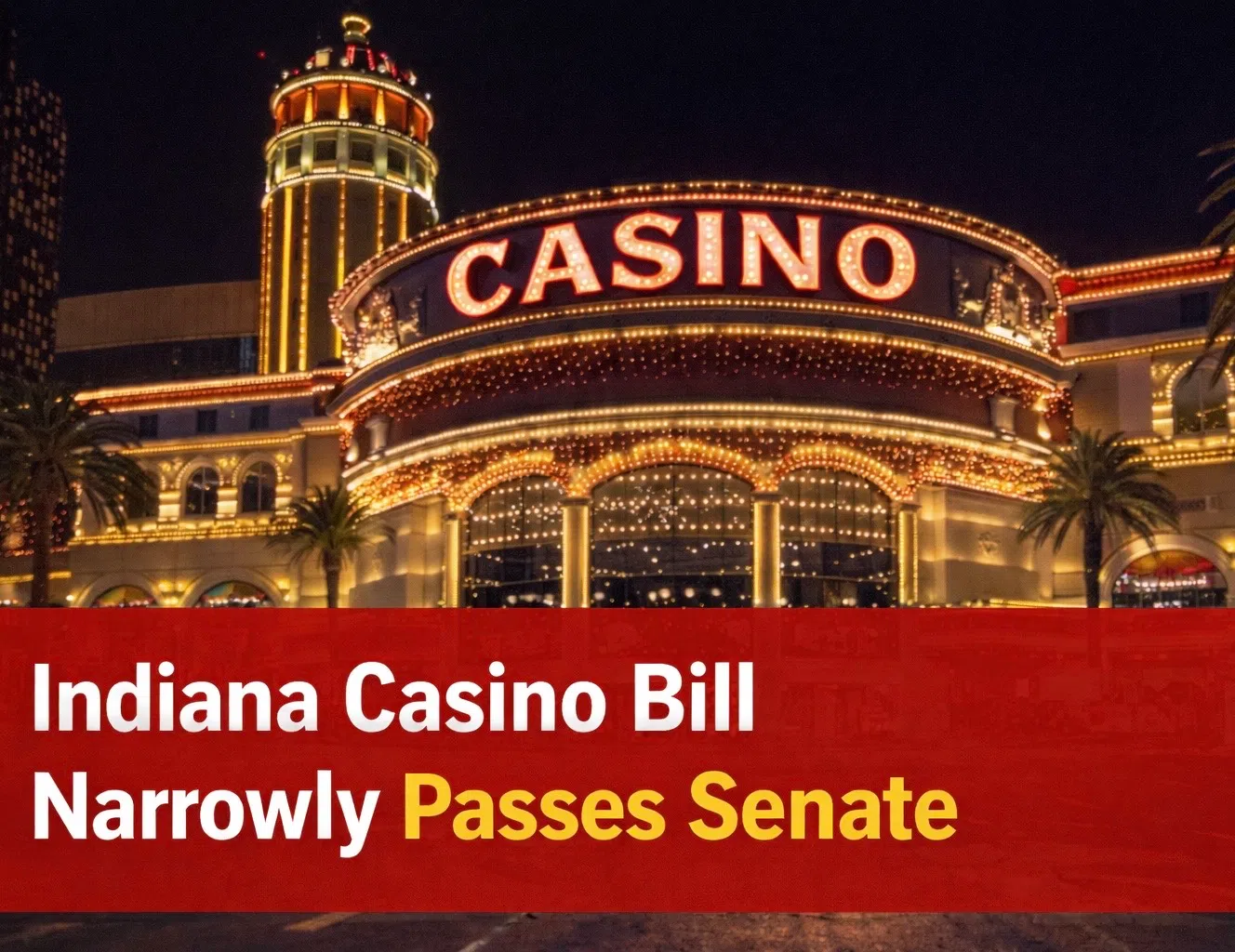
Indiana’s Casino Expansion Reaches a Tipping Point
A bill that could fundamentally reshape the gaming landscape of Northeast Indiana has cleared the state legislature and is now sitting on Governor Mike Braun’s desk, waiting for a signature that could unlock a brand-new land-based casino for a region that has historically been underserved by the state’s gambling infrastructure. This is not a minor regulatory tweak. If signed into law, the legislation would authorize a full-scale commercial casino in Northeast Indiana, a market that operators and local governments have been eyeing for years.
For context, Indiana already operates one of the most mature gaming markets in the Midwest, with riverboat casinos, racinos, and a robust sports betting framework. Adding a Northeast Indiana casino would represent the most significant geographic expansion of that framework in over a decade. The stakes, politically and economically, could not be higher.
- The bill has passed the Indiana legislature and awaits Governor Braun’s signature to become law.
- Northeast Indiana would receive its first authorized commercial casino under this legislation.
- The move is expected to generate significant tax revenue and local employment.
- Regional competition with Ohio and Michigan gaming markets is a key driver behind the push.
- Final implementation would depend on licensing, site selection, and regulatory approval processes.
Why Northeast Indiana, and Why Now
The timing of this legislation is no accident. Indiana’s gaming regulators and state lawmakers have watched neighboring states aggressively expand their casino footprints for years. Ohio opened its first commercial casinos in 2012, and Michigan legalized online gaming and added tribal casino expansions that have been siphoning cross-border gambling revenue ever since. Northeast Indiana, which sits in close proximity to both state lines, has been particularly vulnerable to that revenue bleed.
Fort Wayne, the region’s economic anchor and Indiana’s second-largest city, represents a population center that currently lacks any nearby casino option. Residents who want to gamble at a land-based property face drives of 90 minutes or more in multiple directions. That travel friction does not eliminate demand. It simply redirects it across state lines and into competitors’ hands.
Analyst’s Note: When a major population center is more than 60 minutes from the nearest licensed casino, the economic case for a new property is almost always self-evident. Northeast Indiana fits that profile precisely.
The Legislative Path and Political Context
Getting a casino bill through Indiana’s legislature is never straightforward. The state has a deeply embedded tradition of balancing gaming expansion against concerns about social harm, local opposition, and the protection of existing license holders who have invested heavily under prior frameworks. The fact that this bill reached Braun’s desk at all signals that a meaningful political coalition was assembled in its favor.
Existing Indiana casino operators, particularly those holding riverboat licenses and racino permits, have historically lobbied hard against new competition. Any bill authorizing a greenfield casino in a previously unlicensed region must navigate those incumbent interests carefully. The specifics of how this legislation addressed market cannibalization concerns, whether through exclusivity zones, revenue-sharing mechanisms, or licensing fee structures, will matter enormously when the Indiana Gaming Commission begins implementation work.
Governor Braun’s Position
Governor Braun, a Republican businessman who ran on economic development themes, has not publicly committed to signing or vetoing the bill as of the time of the source reporting. However, his political profile and stated priorities around job creation and regional economic equity make outright opposition unlikely. A casino development of this scale would bring construction jobs, permanent hospitality employment, and a new stream of tax revenue to a region that has faced manufacturing headwinds for decades.
The Regulatory Roadmap Ahead
Even if Braun signs the bill immediately, a functioning casino does not appear overnight. The Indiana Gaming Commission would need to issue a formal request for proposals, evaluate operator applicants, conduct background investigations, and approve a site before any ground is broken. In comparable Indiana gaming expansions, that process has historically taken anywhere from 18 months to three years from bill signing to opening day.
Prospective operators would need to demonstrate financial stability, gaming experience, and a credible development plan. National operators like Churchill Downs Incorporated, Hard Rock, and Penn Entertainment have all shown interest in Midwest expansion opportunities, and a Fort Wayne-area license would likely draw competitive bids from the top tier of the commercial gaming industry.
Economic Impact Projections and Community Considerations
The promise of a new casino is almost always packaged with ambitious economic impact projections. Local boosters point to job creation, hotel development, restaurant and entertainment spin-offs, and a broadened tax base. Critics, including some community groups and social services organizations, raise legitimate concerns about problem gambling prevalence, traffic infrastructure strain, and the cannibalization of existing local entertainment spending.
Indiana’s model for addressing those tensions has typically involved mandatory contributions to the state’s problem gambling fund, local government consent requirements, and phased development agreements that tie operator benefits to community investment commitments. Whether this particular bill includes robust versions of those protections is a detail that will shape public reception when implementation begins.
Pro Tip: If you are tracking this development as an investor or operator, watch the Indiana Gaming Commission’s docket closely in the months following any gubernatorial signature. The RFP structure will telegraph which operator profiles have the best shot at winning the license.
Regional Market Ripple Effects
A Northeast Indiana casino would not exist in a vacuum. Its opening would create measurable competitive pressure on several existing properties, including Blue Chip Casino in Michigan City and potentially some Ohio border properties. It would also interact with Indiana’s legal sports betting market, since retail sportsbooks are typically co-located with commercial casino licenses in the state’s regulatory framework.
For digital gaming analysts, the question of whether the new license would also carry online poker or casino gaming rights is critical. Indiana has not yet legalized iGaming, but the national policy trend is moving in that direction. A new brick-and-mortar licensee would be well-positioned to activate an online skin quickly if Indiana joins the iGaming states in the coming legislative cycle.
The Bottom Line
The Northeast Indiana casino bill reaching Governor Braun’s desk is a genuinely significant moment for Midwestern gaming policy. It reflects years of competitive pressure from neighboring states, sustained advocacy from regional economic development interests, and a pragmatic acknowledgment that Indiana was leaving real money on the table by leaving Northeast Indiana off the casino map.
Whether Braun signs it, and how quickly the Indiana Gaming Commission moves through the licensing process, will determine whether this becomes a transformative regional development or a slow-moving regulatory saga. Either way, the commercial gaming industry is watching Fort Wayne very closely right now, and for good reason.