
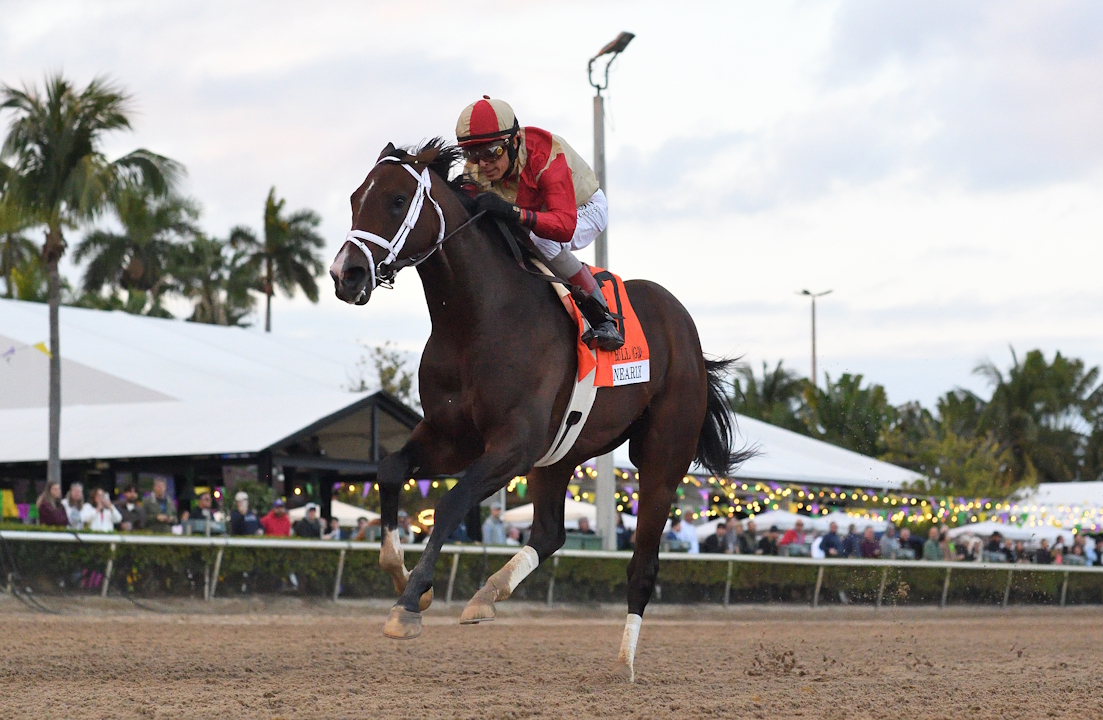
The 2025 Kentucky Derby trail just got a jolt of intensity. Nearly, the Churchill Downs Juvenile Stakes winner who vanished from racing for nearly three months, stormed back in the Holy Bull Stakes (G3) at Gulfstream Park with a performance that has handicappers and bettors recalibrating their Triple Crown boards. But this isn’t just another prep race recap it’s a case study in how elite trainers are weaponizing extended rest cycles to peak colts at precisely the right moment, and what that means for anyone with money on the Derby futures market.
- Extended Rest Protocol: Nearly’s 86 day layoff between races defies traditional Derby prep timelines, yet he returned sharper than ever.
- Tactical Speed Advantage: The colt’s early pace control and sustained finish suggest he can dominate multiple race shapes in upcoming preps.
- Betting Value Shift: His Holy Bull performance will compress Derby futures odds the window for value is closing fast.
- Trainer Pattern Recognition: This rest and rebound strategy mirrors methods used by multiple Breeders’ Cup and Classic winners in recent years.
- Physical Maturation Factor: The visual difference in Nearly’s muscling and stride efficiency points to deliberate development time rather than injury management.
The Strategic Layoff Why Three Months Made Nearly Dangerous
Traditional Derby prep logic dictates consistent racing every 4 6 weeks through winter and spring. Nearly’s connections threw that playbook out. After his November juvenile victory, the colt disappeared from the worktab until late January, returning in the Holy Bull with a performance that wasn’t just competitive it was authoritative.
The numbers tell the story: Nearly controlled fractions through a contested pace, maintaining position while rivals burned energy fighting for the lead. His final time of 1:42.89 for the Holy Bull’s nine furlongs came on a track playing fair, not fast, meaning the raw speed figure translates cleanly across surfaces and conditions.
Analyst’s Note: Extended layoffs for 3 year olds carry massive risk they can lose fitness, timing, or competitive edge. Nearly’s team clearly used proprietary fitness protocols and internal workout data to time this perfectly. That level of preparation separates Derby contenders from Derby winners.
Physical Transformation and Development Windows
Observers at Gulfstream noted Nearly looked substantially more mature than his November appearance. His shoulder definition, hip drive, and overall body mass suggested the time off wasn’t passive it was a calculated development window. Modern equine sports science has proven that young horses, particularly colts still growing into their frames, can gain more from rest and targeted training than from competitive racing every month.
For bettors, this creates a critical insight: horses showing visible physical improvement after layoffs often outperform their past speed figures by 3 7 points in their return race and maintain that new baseline. Nearly fits that profile precisely.
Pace Dynamics and Race Shape Versatility
The Holy Bull revealed something crucial about Nearly’s tactical range. Unlike one dimensional speed horses that must lead or die, Nearly demonstrated he can rate behind pace, apply pressure to leaders, or control tempo himself. This versatility is Derby essential the first Saturday in May rarely unfolds according to plan, and colts that can only win one way rarely reach the wire first in a 20 horse cavalry charge.
Breaking Down the Holy Bull Fractions
Nearly’s position throughout the Holy Bull showed calculated aggression. He wasn’t merely reacting to the pace he was dictating it. Through the opening quarter in :23.2 and the half in :46.8, he maintained contact with the speed while preserving energy. When the stretch run demanded acceleration, he had reserves to draw on.
Compare that to horses who win preps by rating far back and running by exhausted speed those patterns look impressive but often fail in the Derby’s faster, more competitive pace scenarios. Nearly’s style is far more translatable to Churchill’s demanding 10 furlong test.
Market Implications and Betting Strategy
Before the Holy Bull, Nearly sat at approximately 20 1 on most Derby futures boards. That number won’t hold. Expect his odds to compress to the 8 1 to 12 1 range within days as money flows toward proven prep winners with clean health histories.
For sharp bettors, the lesson is clear: the value play was before the Holy Bull. Now, the analysis shifts to whether his next prep likely the Florida Derby (G1) will provide any overlay, or if the market has fully adjusted to his capabilities.
Comparative Value Assessment
When evaluating Derby contenders post Holy Bull, consider Nearly against the other major prep winners. Does he offer better value than the San Felipe or Southwest Stakes victors? His versatility and physical improvement suggest he’s undervalued relative to one dimensional speedballs trading at similar odds.
Pro Tip: Track how Nearly’s odds move in the 48 hours after this race. Sharp money often moves fastest, and if you see his number drop below
10 1immediately, it signals industry respect potentially warranting a small position before further compression.
The Trainer Pattern and Historical Context
Elite trainers don’t guess they work from proven templates. The extended rest protocol Nearly’s team employed mirrors methods used with recent Breeders’ Cup Classic and Dubai World Cup winners. The pattern: give a talented young horse time to mature physically, maintain fitness through private workouts rather than races, then return them when they’re genuinely ready to perform at peak capacity.
This approach requires institutional knowledge, veterinary precision, and willingness to resist external pressure to run. It’s the opposite of the assembly line Derby prep model where colts race every four weeks regardless of individual readiness.
Physical Readiness Indicators for the Derby Trail
Nearly’s Holy Bull performance checked multiple boxes that predict future success on the Derby trail:
- Stride Efficiency: No wasted motion, clean gate to wire action
- Recovery Rate: Post race gallop out showed minimal fatigue
- Tactical Awareness: Responded to jockey cues without over racing
- Surface Adaptability: Handled Gulfstream’s main track with confidence
Each of these factors correlates with horses that can handle the accumulated stress of the Derby trail multiple high stakes preps spaced weeks apart, each demanding peak performance.
What This Means for the 2025 Derby Picture
Nearly’s Holy Bull statement reshuffles the Derby hierarchy. He’s no longer a promising juvenile who might develop he’s a proven prep winner with demonstrated tactical versatility and a physical profile that suggests more improvement ahead. That combination makes him a legitimate top 5 Derby contender in any objective ranking.
For the betting market, expect his next start to carry enormous weight. A strong Florida Derby confirms he’s the real deal and pushes him into the 6 1 to 8 1 Derby favorite conversation. A stumble opens value again but raises questions about whether the Holy Bull was peak performance or sustainable form.
The Bottom Line for Bettors and Racing Fans
Nearly’s comeback isn’t just about one horse winning one prep race. It’s a window into how modern training science is changing Derby preparation strategy. The willingness to rest horses longer, develop them deliberately, and return them at optimal readiness rather than on arbitrary calendars that’s the new competitive edge.
For handicappers, the takeaway is clear: evaluate horses not just on their last race but on the preparation philosophy behind that race. Nearly came back from 86 days looking better, faster, and more tactical. That’s not luck it’s expertise, and it’s exactly what wins Triple Crown races.
The Derby trail just got more competitive, and anyone holding old futures tickets on Nearly just saw their investment appreciate significantly. For everyone else, the question isn’t whether he’s legitimate the Holy Bull answered that. The question is whether there’s still value before the rest of the market catches up.