
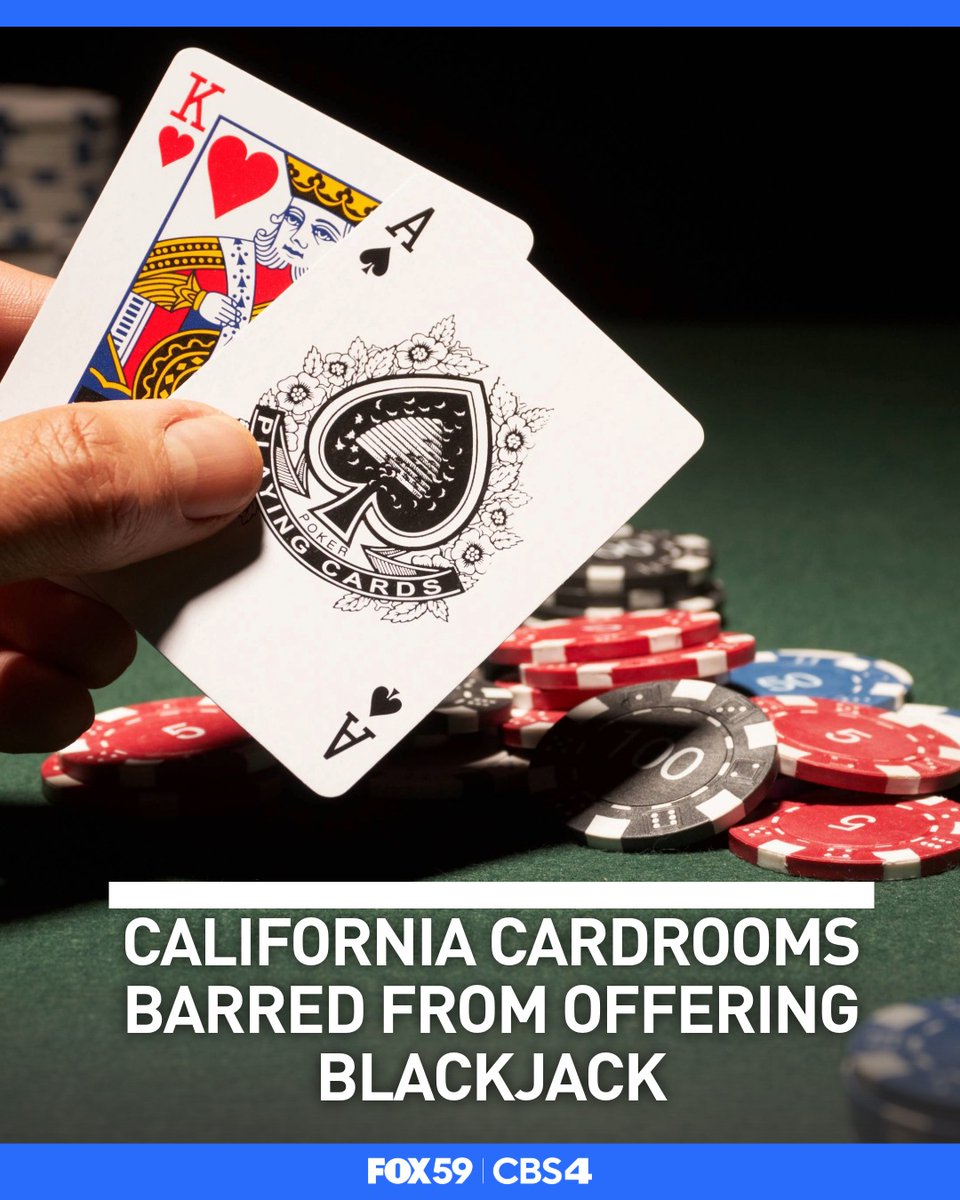
California just executed one of the most significant gambling regulatory shifts in decades. Starting January 1, 2025, the state’s 85 licensed cardrooms will no longer offer blackjack, baccarat, or pai gow games that have fueled a decades long legal war between tribal casinos and commercial card clubs. The move doesn’t just rewrite the rules; it fundamentally restructures where Californians can play banked casino games and who profits from the state’s $1.8 billion card club industry.
Governor Gavin Newsom signed Assembly Bill 2664 into law, ending what industry insiders call “controlled games” a legal workaround that allowed cardrooms to simulate traditional casino banking by hiring third party corporations to act as the house. For players who’ve spent years grinding these tables, the question isn’t whether this changes the game. It’s whether the game still exists at all.
Key Takeaways
- California cardrooms must eliminate blackjack, baccarat, and pai gow poker by January 1, 2025
- The ban targets “controlled games” where third party corporations acted as the house, a model tribal nations fought for 20+ years
- Cardrooms can still operate player vs player poker games, but revenue models face complete restructuring
- Tribal casinos gain exclusive rights to banked casino games, consolidating California’s gaming duopoly
- Approximately 1,000+ cardroom jobs are at immediate risk, with total employment impact still unknown
The Controlled Game Loophole That Broke the Industry
California’s Constitution grants tribal nations exclusive rights to operate Nevada style casino banking games craps, roulette, and blackjack where the house holds the bankroll. Cardrooms, licensed under a separate framework dating to the Gold Rush era, were limited to player vs player games like poker. But in the 1990s, cardrooms engineered a workaround: third party Player Dealer corporations that rotated the banking position among players, technically keeping the cardroom neutral.
The model was brilliant and legally dubious. A corporation would assume the house role for a series of hands, paying winners and collecting from losers, while the cardroom collected fees for hosting the action. Players could theoretically become the banker themselves, satisfying the “player vs player” requirement. In practice, professional banking corporations dominated the role, creating a house banked experience in everything but name.
The 20 Year Legal Siege
Tribal governments argued this was textbook regulatory arbitrage cardrooms offering blackjack while avoiding tribal gaming compacts and revenue sharing agreements. The Pechanga Band of Indians, San Manuel Band of Mission Indians, and other coalitions filed lawsuits, funded ballot initiatives, and lobbied Sacramento relentlessly. Cardrooms countered that they were operating within the law and providing jobs in communities where tribal casinos didn’t exist.
Analyst’s Note: The controlled game model generated an estimated
$400 600 millionannually for California cardrooms. That revenue didn’t just vanish it migrated to tribal properties with the infrastructure and capital to absorb displaced players. This isn’t a regulatory tweak; it’s a market transfer.
What Changes on January 1, 2025
Assembly Bill 2664 is unambiguous. Cardrooms must cease all “controlled game” operations, defined as any game where a third party corporation or rotating player dealer assumes the house banking function. Specifically eliminated:
- Blackjack variants (including Spanish 21, Free Bet Blackjack)
- Baccarat (Punto Banco, EZ Baccarat)
- Pai Gow Poker and traditional Pai Gow tiles
- Three Card Poker and other house banked poker derivatives
Traditional poker Texas Hold’em, Omaha, Seven Card Stud remains legal and unchanged. But poker revenue models depend on rake structures and tournament fees, which generate far less per square foot than banked table games. Industry analysts estimate poker only cardrooms will see revenue declines of 30 50% in the first year.
The Jobs and Economic Fallout
Cardroom operators warn of catastrophic job losses. Kyle Kirkland, president of the California Gaming Association (the cardroom trade group), stated that the ban threatens “tens of thousands of jobs” across dealing, security, food service, and support roles. The state’s Legislative Analyst’s Office hasn’t published an employment impact study, but internal cardroom data suggests approximately 1,200 1,500 full time dealer positions are directly tied to controlled games.
Smaller cardrooms face existential risk. Properties in Bell Gardens, Gardena, and Hawaiian Gardens built entire business models around baccarat and blackjack. Without those games, many lack the poker traffic to sustain operations. Expect consolidation larger clubs absorbing smaller licenses, or outright closures in markets saturated with tribal competition.
Tribal Casinos Claim Total Victory
For California’s 76 tribal gaming operations, AB 2664 represents the endgame of a multi decade strategy. Tribal casinos operate under federal Indian Gaming Regulatory Act (IGRA) compacts that grant exclusivity for Class III gaming slots, banked card games, and craps. In exchange, tribes pay revenue sharing fees to the state and fund local impact mitigation.
The Pechanga Band of Luiseño Indians, operators of the largest resort casino between Las Vegas and Los Angeles, issued a statement praising the law as “restoring the integrity of California’s gaming framework.” Translation: cardrooms were undercutting tribal exclusivity, and now the competitive imbalance is corrected.
Market Consolidation and Player Migration
Tribal properties are already expanding table game pits in anticipation. San Manuel Casino added 15 blackjack tables in Q4 2024. Pechanga is hiring 40+ additional dealers. The player migration is predictable Southern California cardroom regulars will shift to nearby tribal properties in Temecula, Valley Center, and the Coachella Valley.
But geography matters. Northern California cardrooms, clustered around the Bay Area and Sacramento, face different dynamics. Tribal casinos exist but are often 60 90 minutes from urban centers. Players who valued the convenience of local card clubs may reduce session frequency rather than commute. That’s a net loss for California’s taxable gaming revenue.
Pro Tip: If you’re a California blackjack player, map your nearest tribal casino now. Table limits, comp programs, and game selection vary dramatically. Properties like Pechanga and San Manuel offer Strip level amenities; smaller tribal rooms may have higher minimums and fewer tables. Do reconnaissance before January 1.
The Regulatory Chess Match Behind AB 2664
AB 2664 didn’t emerge in a vacuum. It’s the legislative culmination of a 2023 California Supreme Court ruling in Pico Cardroom v. Bureau of Gambling Control, which upheld the state’s authority to regulate and potentially ban controlled games. Tribal coalitions spent millions on lobbying, while cardrooms mobilized employee unions and local governments dependent on cardroom tax revenue.
The bill’s language includes a critical compromise: cardrooms retain licenses and can operate poker indefinitely. This prevents a full industry collapse and preserves the regulatory framework for potential future expansions (online poker, sports betting). But make no mistake the tribal lobby won decisively.
What This Means for California Sports Betting and iGaming
California has repeatedly rejected sports betting ballot initiatives, largely because tribal and cardroom factions can’t agree on market structure. AB 2664 removes cardrooms as a major negotiating bloc. Future sports betting or online casino frameworks will likely center tribal interests exclusively, potentially accelerating legalization timelines. The political calculus just simplified dramatically.
The Bottom Line
California’s blackjack ban isn’t about protecting players or eliminating shady operators. It’s about enforcing a constitutional exclusivity agreement that tribal nations purchased through decades of litigation and political capital. Cardrooms that built empires on legal gray areas are paying the price. Players lose convenience and competition. Tribal casinos gain monopoly power.
For the California gambler, the message is stark: adapt or drive. The controlled game era is over. The tribal casino era is absolute. And if you want to split eights against a dealer’s five, you’ll do it on sovereign land or not at all.