
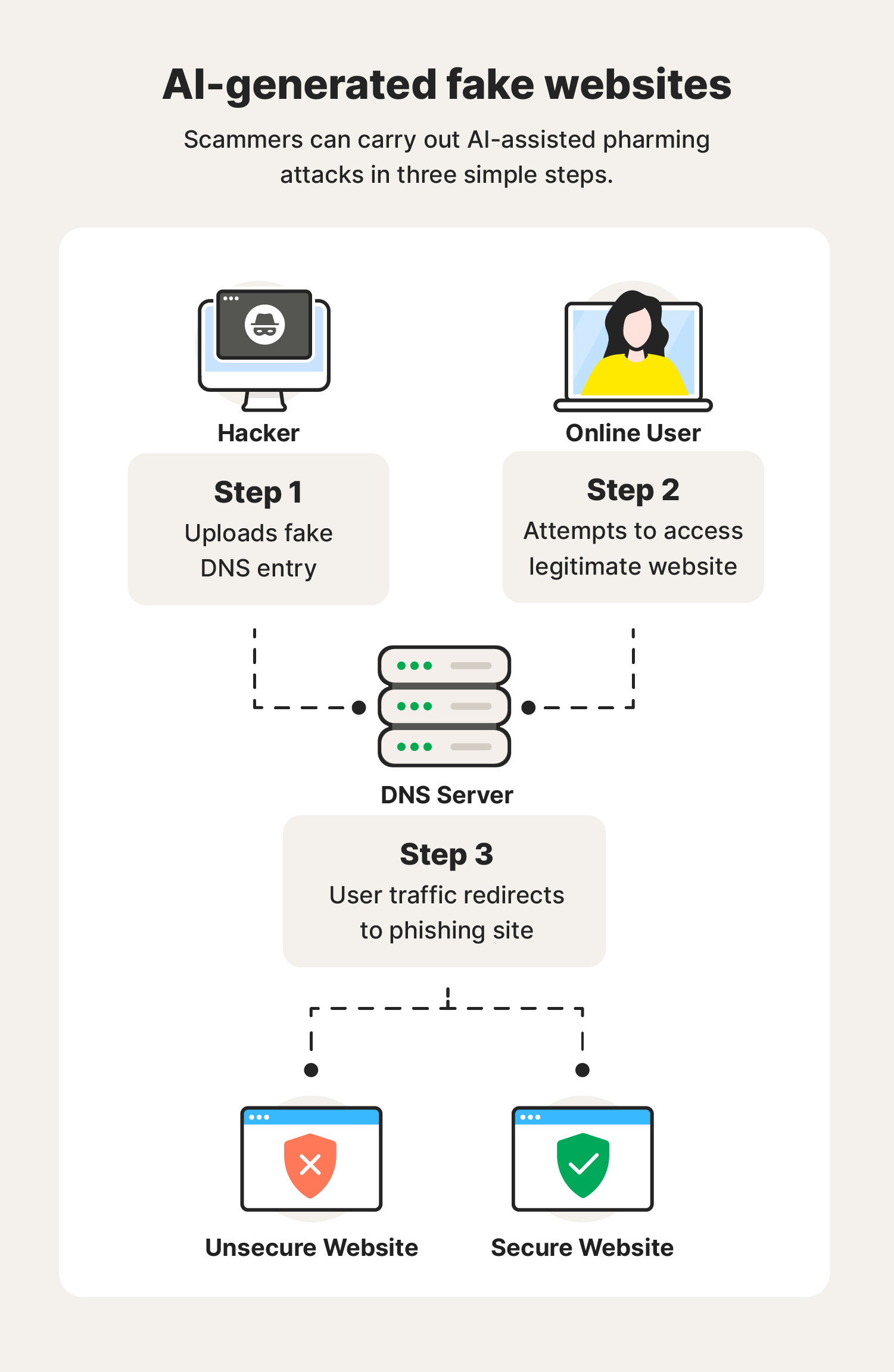
The same technology that is turbocharging legitimate online casino development is quietly arming a new generation of fraudsters. According to a recent Marketplace report, AI coding assistants have collapsed the technical barrier to building convincing, functional websites from weeks of development work down to a single afternoon. For the iGaming sector, an industry already operating under intense regulatory scrutiny and persistent trust deficits, that shift is not a footnote. It is an existential threat vector hiding in plain sight.
The AI-generated scam website problem is accelerating precisely because the tools are neutral. Cursor, GitHub Copilot, and a dozen other AI coding platforms do not distinguish between a licensed operator building a compliant poker room and a bad actor spinning up a pixel-perfect clone of one. The code compiles either way. And in a vertical where player trust is the entire product, that symmetry is dangerous.
- AI has democratized fraud: Building a convincing gambling clone site now requires no coding expertise, only a prompt and a hosting account.
- iGaming is a prime target: High transaction volumes, anonymous payment rails, and a player base accustomed to offshore brands make the sector uniquely vulnerable.
- Regulators are lagging: Existing consumer protection frameworks were not designed for AI-velocity fraud deployment.
- Affiliate networks face serious liability exposure: AI-generated rogue sites are already mimicking affiliate tracking links to siphon commissions and player data.
- Brand defense must evolve now: Operators relying on legacy DMCA takedowns and manual monitoring are already behind the threat curve.
How AI Collapsed the Cost of Building a Scam
To understand the scale of the problem, you need to understand what actually changed. Pre-2023, launching a fraudulent gambling site required either hiring developers comfortable with criminal liability or possessing substantial coding skills yourself. The average sophisticated phishing or clone site took weeks to build, limiting the number of active fraud operations at any given time.
That calculus is gone. Modern AI coding assistants can generate a full-stack web application, complete with login flows, payment processing UI, responsive design, and even simulated game interfaces, in hours. The Marketplace investigation documented cases where bad actors used these tools to produce sites that were, to the untrained consumer eye, indistinguishable from legitimate operators.
For iGaming specifically, the attack surface is wide open. Consider what a convincing fake casino site needs: a homepage with game thumbnails, a registration form, a deposit flow, and some form of “live” lobby aesthetic. None of those components require proprietary technology. All of them can be scaffolded by an AI tool using publicly available design patterns from real operators. The result is a fraud factory operating at software-development scale.
Analyst’s Note: The marginal cost of launching the hundredth scam site is now nearly identical to the cost of launching the first. That is the defining economic reality operators must internalize when building their brand protection strategies.
The iGaming Trust Economy Under Pressure
Why Gambling Sites Are the Ideal Fraud Target
The iGaming vertical has characteristics that make it disproportionately attractive to AI-assisted fraudsters. First, players are already conditioned to engage with offshore, digitally-native brands they cannot physically verify. A player depositing at a licensed Curacao or Malta-regulated operator has already accepted a degree of abstraction between themselves and the entity holding their funds. That psychological baseline makes it easier to deceive.
Second, the payment flows in gambling are inherently high-velocity and often involve cryptocurrency, prepaid cards, or e-wallets that offer limited chargeback protection. A scam site that processes even a modest volume of first deposits before going dark can generate significant returns with minimal operational overhead, especially when the site itself cost almost nothing to build.
Third, the competitive and fragmented nature of the affiliate marketing ecosystem creates natural camouflage. Players routinely discover new casinos through comparison sites, social media, and influencer content. A fake operator inserted into that discovery funnel, dressed with AI-generated review content and fabricated bonus offers, can achieve meaningful player acquisition before detection.
The Affiliate Network Problem
Perhaps the most underreported dimension of this threat is what it means for affiliate marketing networks. AI tools are now being used to generate not just clone casino sites, but fake affiliate portals, fake review aggregators, and even synthetic influencer profiles promoting fraudulent operators.
This creates a dual liability problem. Legitimate affiliates find their brand identities cloned to lend credibility to rogue operators. Legitimate operators find fake affiliate sites driving traffic under their brand name, with players then depositing into imitation sites. Both damage player trust in the broader ecosystem, and neither party has robust tooling to detect it in real time.
AI-generated affiliate fraud also exploits the technical complexity of tracking infrastructure. Fake sites can replicate the visual language of established affiliate portals, including fake tracking links that superficially resemble legitimate UTM parameters, to intercept player journeys before they reach a licensed destination.
Regulatory Reality Check
Frameworks Built for a Pre-AI Threat Landscape
Regulatory bodies across the UK, EU, and North America built their consumer protection frameworks around a world where fraud required meaningful human effort. The UK Gambling Commission, the Malta Gaming Authority, and state-level regulators in the US each maintain licensing registers and operate player complaint channels. What they do not have is infrastructure capable of monitoring AI-velocity site deployment across the open web.
The Marketplace report highlights that consumer protection agencies broadly are struggling to keep pace with AI-assisted fraud. In iGaming, that gap is compounded by jurisdictional complexity. A fraudulent site registered in an offshore jurisdiction, built with a US-based AI tool, targeting players in the EU exists in a regulatory no-man’s land where enforcement timelines are measured in months, not the hours it took to deploy the fraud.
Pro Tip for Operators: Do not wait for regulators to solve this. Invest in automated brand monitoring tools that scan for domain registrations, visual clones, and unauthorized use of your licensed marks. The detection window before player harm is your only practical intervention point.
What Responsible Operators Must Do Now
The threat is real, but it is not unmanageable for operators who move with urgency. Several strategic responses are already proving effective in adjacent digital sectors and translate directly to iGaming.
Continuous domain monitoring using services that flag newly registered domains with typographic or phonetic similarity to your brand is table stakes. More sophisticated operators are deploying visual fingerprinting technology that crawls the web for sites using their UI assets, color schemes, or game thumbnail libraries without authorization.
On the player-facing side, verified direct communication channels are increasingly important. Operators should proactively educate their player bases about how to verify they are on the correct domain, emphasizing SSL certificate details, official app stores, and licensed operator registers as verification tools. Embedding that education into onboarding flows and promotional communications costs little and builds meaningful resilience.
The affiliate relationship also requires structural reinforcement. Operators should audit their affiliate agreements to include explicit provisions around AI-generated content, synthetic traffic, and unauthorized brand use, with clear enforcement mechanisms. Affiliate managers need to be actively monitoring partner sites for signs of compromise or impersonation, not simply tracking conversion metrics.
The Bigger Picture for the Industry
The Marketplace report frames the AI scam site problem as a broad consumer issue, and it is. But for iGaming, the stakes are sector-specific and acute. This is an industry that has spent years fighting to be taken seriously by mainstream regulators, banks, and the public. Every convincing fraud site that burns a player does not just harm that individual. It erodes the credibility of the licensed operators who play by the rules and reinforces the narrative that online gambling is inherently unsafe.
The technology that created this problem is not going away. AI coding tools will get faster, cheaper, and more capable. The sites they can generate will get more convincing. The window in which the industry can get ahead of this threat with proactive infrastructure, regulatory engagement, and player education is open right now. It will not stay open indefinitely.
Operators, affiliates, and platform providers who treat AI-generated fraud as someone else’s problem are making a strategic error. This is the industry’s problem, and the industry’s response will define how the next chapter of player trust gets written.